

Co-Living 2.0: When the Office Becomes the Destination
By 2026, the boundary between “working” and “traveling” has completely dissolved. The global workforce has shifted from temporary remote work to a permanent location-independent lifestyle.
In response, the hospitality industry has undergone its most significant transformation in a century. Traditional hotels are no longer just places to rest; they have evolved into High-Performance Co-Living Hubs. Here is how the “Office-as-a-Destination” is redefining the stay.
1. The Lobby Revolution: From Waiting Areas to Production Suites
In 2026, the hotel lobby is no longer a pass-through space with uncomfortable decorative chairs. It has become the engine room of the modern economy.
- Acoustic Architecture: Lobbies are now designed with “Sonic Zones.” While one area hums with collaborative energy, another features vacuum-sealed, glass-walled pods optimized for high-definition video calls and podcast recording.
- Hyper-Connectivity: We’ve moved beyond standard Wi-Fi. Co-living stays now offer dedicated low-latency satellite links (Starlink 3.0) and ergonomic “Gravity Chairs” as standard amenities, ensuring that a guest in a remote Balinese villa has the same digital throughput as a trader in Manhattan.
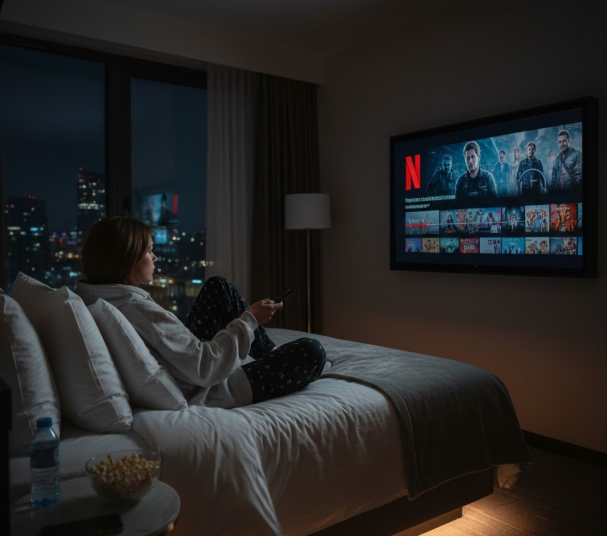
2. “Housing-as-a-Service”: The Netflix Model for Living
The most disruptive shift in 2026 is the death of the rigid check-out date. Major hospitality brands have launched Global Stay Subscriptions.
- The Roaming Passport: For a flat monthly fee, digital nomads can “subscribe” to a hotel brand. This allows them to spend ten days in Mexico City, a week in Tokyo, and the rest of the month in Lisbon—all without signing a single lease or paying a security deposit.
- Predictive Logistics: These platforms use AI to manage “luggage-free” travel. Your “Global Capsule Wardrobe” is shipped ahead of you and is waiting in your next closet, dry-cleaned and ready, making the jump between cities as easy as switching a TV channel.
3. From “Tourist” to “Temporary Neighbor”
The loneliness of the road was the biggest hurdle for the first wave of digital nomads. Co-Living 2.0 solves this through Hyper-Local Integration Programs.
- Curated Communities: Hotels now employ “Community Engineers” instead of just Concierges. Their job is to connect guests with local professional guilds, invite-only networking dinners, and neighborhood volunteer projects.
- Skill-Sharing Hubs: Weekly “Residency Nights” allow guests to give workshops to locals and other guests, turning the hotel into a micro-university. You aren’t just visiting a city; you are contributing to its social fabric.
Why It Works: The Professionalization of the Nomad
This model is successful because it acknowledges that for the 2026 traveler, productivity is the prerequisite for pleasure. By removing the frictions of traditional travel—unstable internet, social isolation, and lease bureaucracy—Co-Living 2.0 allows professionals to sustain their careers indefinitely while exploring the globe.
In this new era, the best hotels are those that help you build a life, not just book a night.