

This year, interest in “off-the-beaten-path” destinations has solidified Central Asia as the epicenter of conscious and cultural tourism. What was once a secret for intrepid backpackers is now a sophisticated alternative to overcrowded European destinations. While Uzbekistan dazzles with its architectural renaissance, Kyrgyzstan positions itself as the ultimate sanctuary for slow travel and mountain adventure.
Uzbekistan: The Crown Jewel of 2026
Uzbekistan has not only preserved its history; it has set it in motion. Samarkand, Bukhara, and Khiva are no longer just open-air museums, but vibrant cities where modernity respects the layout of ancient empires.
- Cutting-Edge Infrastructure: The expansion of the Afrosiyob high-speed train now connects major cities in a matter of hours, eliminating long desert treks. Additionally, the new “Heritage Hotels” program has transformed ancient madrasas and caravanserais into boutique accommodations offering contemporary luxury without losing the Silk Road’s mystique.
- Cultural Epicenter: In 2026, Samarkand feels more alive than ever. Bazaars have regained their importance as hubs for artisanal exchange, where Uzbek silk and ikat designs are capturing the attention of global fashion houses.
Kyrgyzstan: The Roof of the World and the Nomad Spirit
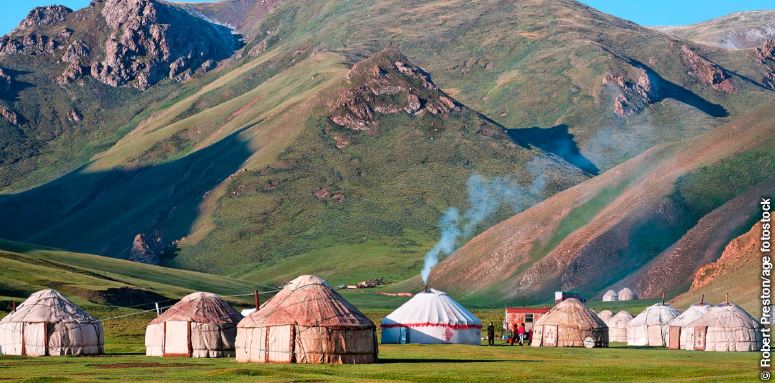
If Uzbekistan is the cultural soul, Kyrgyzstan is the wild heart. The Tien Shan Mountains offer a backdrop of snow-capped peaks and turquoise lakes, such as Issyk-Kul, that rival any Alpine landscape but with a fraction of the visitors.
- The VI World Nomad Games: In 2026, Kyrgyzstan returns as host for this massive event. From August 31 to September 6, the country becomes a stage for ancestral sports like horseback archery and Kok Boru. It is the perfect opportunity to witness the strength of a culture that refuses to forget its roots.
- Regenerative Tourism: The network of community-managed guesthouses has grown, allowing travelers to sleep in traditional yurts and participate in making plov or raising horses, ensuring the economic impact of tourism reaches local families directly.
Why Travel Now? (2026 Data): Connectivity has never been easier. Simplified e-visas and the removal of border restrictions between both countries allow for frictionless combined itineraries. Furthermore, a new regional transport corridor has facilitated access to remote valleys, allowing even travelers with limited time to explore the depths of the Kyrgyz mountains.