

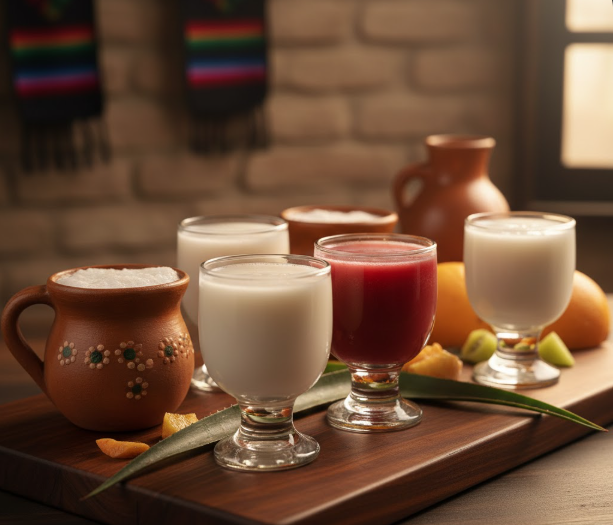
The Resurgence of Ancestral Drinks: Pulque, Sake, and Kveik
By 2026, the global beverage industry has undergone a radical transformation. We have moved past the era of “consistent but soul-less” industrial lagers and spirits. Today’s sophisticated palate, driven by a generation that values gut health, carbon transparency, and cultural heritage, is embracing the “controlled chaos” of ancestral fermentation.
This isn’t just a trend; it’s a return to the biological roots of what we drink.
1. Modern Pulquerías: The Probiotic Renaissance in CDMX
In Mexico City, Pulque—once the sacred beverage of the Aztecs—has completed its journey from a marginalized “peasant drink” to the star of high-end urban mixology.
- The “Living” Drink: Unlike beer or wine, pulque is not pasteurized; it is a “living” beverage teeming with Lactobacillus and wild yeasts. Modern science in 2026 has confirmed its benefits as a potent probiotic, making it the “kombucha of the spirits world.”
- The New “Curados”: In trendy neighborhoods like Roma and Condesa, the traditional curado (pulque blended with fruit) has evolved. Mixologists are now using sous-vide techniques to infuse pulque with exotic botanicals, creating low-alcohol cocktails that bridge the gap between ancient ritual and modern wellness.
- Traceability: New digital certifications now allow drinkers to scan a QR code at the bar to see exactly which maguey plant the sap (aguamiel) came from and the name of the Tlachiquero (harvest master) who collected it.
2. Sake 2.0: The Micro-Brewery Revolution
While mass-produced sake is in decline, the “Craft Sake” movement is exploding. The focus has shifted from “polishing ratios” to “terroir and technique.”
- The Return of the Kimoto Method: Young Tojis (brewmasters) are reviving the labor-intensive Kimoto and Yamahai methods. These techniques rely on natural lactic acid bacteria from the air rather than lab-grown additives, resulting in sakes with higher acidity and “funk”—profiles that pair perfectly with global cuisines, not just sushi.
- Ancient Grains: We are seeing the resurrection of forgotten rice varieties like Omachi or wild heirloom grains that haven’t been farmed in a century. These grains provide a rustic, earthy complexity that industrial rice simply cannot match.
- Global Production: No longer confined to Japan, 2026 has seen the rise of “Sake Terroir” in places like Oregon, Spain, and even Mexico, using local water sources to create unique regional expressions of this rice wine.
3. Kveik: The Viking “Super-Yeast” and Sustainable Brewing
In the brewing world, the Norwegian ancestral yeast known as Kveik has become the hero of the eco-conscious movement. Its biological properties are nothing short of miraculous for the modern era.
- Heat-Resistant Fermentation: Most yeasts require strict temperature control around
- The Carbon Footprint Win: By eliminating the need for industrial-scale glycol cooling systems during fermentation, breweries using Kveik have reported a 30% reduction in energy consumption.
- Speed of Production: Kveik can complete a full fermentation cycle in as little as 36 to 48 hours. This “hyper-speed” allows small craft breweries to increase their output without expanding their physical footprint, making local beer more economically viable.